The Player of Games by Iain M. Banks


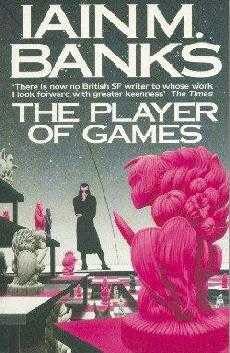
The Player of Games
Iain M. Banks
(Orbit, London: 1989)

A Culture Novel

READ: November-December 2007

I picked this up, mostly out of curiosity because Randal has been singing Iain M. Banks' praises for a while now. Though when he found out I was reading it, he said he would have recommended others of his books, rather than this one.

It was fine, but for someone who is only moderately familiar with the genre, Banks' particular mix of science fiction and fantasy, at least in this book, didn't really do it for me. The Player of Games tells the story of Gurgeh, a renowned game-player from the Culture, a super-advanced galactic civilization. He is sent, through a strange set of circumstances, to the Empire of Azad to participate in the Empire's ultimate tournament, a series of games which, for Azadians, determine job positions and social ranks.

While it was an interesting read, I found it a little long and ponderous at times. The story did have many parallels in today's world, especially in how its overall "point" (so to speak) was about racism and sexism, but I found it handled a little clumsily at times. Randal says I need to read more books in the genre to gain a better appreciation of what SF&F authors may be trying to do in similar cases, and he's probably right. That said, I'd be interested in reading more Banks because I can tell he has better things to offer.

A Short History of Nearly Everything by Bill Bryson


A Short History of Nearly Everything
Bill Bryson
(Anchor Canada (Random House), Toronto?: 2004)

READ: November 2007

I'd been wanting to read this book for months now, and boy, was it worth the wait. In his Short History, Bryson explains everything from the beginnings of life on our planet, to astrophysics, natural disasters, dinosaurs, and Einstein's theory of relativity, in plain, simple language. Well-known as a travel writer, Bryson brings his particular brand of humour to these, and many other questions of scientific import. Entertaining and elucidating, it's one of those books I should have taken notes on while reading. Well-documented, and well-thought out, this is one of the most entertaining and informative reads I've had in a while. My first Bryson book, but definitely not my last.

Roald Dahl's Book of Ghost Stories edited by Roald Dahl


Roald Dahl's Book of Ghost Stories
Roald Dahl, ed.
(Farrar, Straus and Giroux, New York: 1983)

Originally published in the United Kingdom in 1983.

READ: August-November 2007

In the late 1950s, Roald Dahl started collecting ghost stories. He was looking for the best of the best, the cream of the crop, with the intention of making a television series based on these stories. The series died after the pilot episode, but it left Dahl with an appreciation for the difficulties in finding truly good ghost stories:

The best ghost stories don't have ghosts in them. At least you don't see the ghost. Instead you see only the result of his actions. Occasionally you can feel it brushing past you, or you are made aware of its presence by subtle means. [...] If a story does permit a ghost to be seen, then he doesn't look like one. He looks like an ordinary person.

In preparation for the ill-fated television series, Dahl read over 700 ghost stories. He published this collection almost 25 years later, adding a few stories he hadn't included in his original list, and removing some others. The result isn't the scariest book ever. You can't pick up this book expecting to be scared out of your boots. Many of these stories are, to be honest, not very scary. But they are all well-written, and many of them were quite successful at making me feel fairly unnerved. A few positively rose the hairs on the back of my neck. I still think, for example, of Harry by Rosemary Timperley with a chill and a shudder. Others are just clever; for example, W.S. by L. P. Hartley and Playmates by A. M. Burrage. The bulk of the stories are from the first half of the 20th century, so the writing style may not be to everyone's liking, but overall, the stories are fairly entertaining and interesting, and it's a fairly worthwhile read.

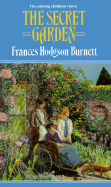
The Secret Garden by Frances Hodgson Burnett


The Secret Garden
Francis Hodgson Burnett
(Wordsworth Editions Limited, Ware (Hertfordshire): 1993)

New introduction and notes added in 2000. First published in 1909.

READ: October-November 2007

Though it's a classic of children's lit, I'd never read this before, and now I know why it is so highly thought of. I don't know how I missed it. What a fantastic, amazing book. You can always tell, with a really good book like this, why exactly it is the classic it became. The Secret Garden tells the story of Mary Lennox, a spoiled, selfish little girl, who is sent to live in Yorkshire with her hunchback uncle after the death of her parents in India. After discovering a secret garden, a transformation comes over her and the inhabitants of the Yorkshire mansion that perhaps can't be explained by anything other than magic. It sounds a little hokey, perhaps, but the writing is charming and sure to win you over. It charmed me from page one, and I was sad to put it down.

Obasan by Joy Kogawa


Obasan
Joy Kogawa
(Penguin Books, Markham (Ont.): 1983)

First published by Lester & Orpen Dennys Ltd., 1981

READ: October-November 2007

I first read this in my second-year university course in Canadian literature and, looking for something to read on my bookshelves at my parents' house, decided it was time for a re-read.

I had forgotten how compelling a story it is. Obasan tells the story of the displacement of the Japanese Canadians in WWII through the eyes of a child. Naomi has never been to Japan, and doesn't really understand what is happening when her own family gets broken up because of the war. She has never thought of herself as different, and continues to live in some sort of denial of that fact, until many years later, after the death of her uncle who helped raise her, when she starts to become more aware of the true extent of the injustice and prejudice that had been levelled against Japanese Canadians for so many years.

To be sure, I have a better appreciation now for the Japanese culture, and also WWII events, that I did not have when I first read this. It's a really poignant story, and, given the heady nature of its subject matter, does a surprisingly good job of not being too heavy-handed, with one or two exceptions. Kogawa really captures the sense of a child, bewildered by the changes around her but, in the way of children, easily adaptable to whatever circumstances are thrown her way. The writing is very accessible, and the story, while sometimes glossed over in history books, is one that every Canadian ought to know.

The Da Vinci Code by Dan Brown


The Da Vinci Code
Dan Brown
(Doubleday, New York: 2003)

READ: October 2007

I picked this up because it was cheap and I figured I should see what the buzz is all about.

Well, it was pretty much exactly what I expected it to be - PULP. I guess there's nothing de facto wrong with that, and I guess it's more high-quality pulp than some other pulp (if that makes any sense).

I know the book generated both a lot of excitement and a lot of flack over its actual content. As far as the whole idea of the Holy Grail being the fact that there is a family alive today who is descended from Jesus Christ, and that the Church is deadly afraid of this and has gone to great lengths over the past two millenia to attempt to eradicate both the knowledge and the family - sure, it was plausible enough. I mean, I have no background in this sort of thing. I also don't believe it (or maybe I do, but don't really care), but it's an interesting theory. Why not, right? It was fun to read for that aspect, I guess.

However, I couldn't stand the writing style. I know one of the conventions of novel-writing is to end each chapter with a bit of a cliff-hanger, but here each chapter was about 2-3 pages long (with a few exceptions), and it just became too much. It felt like I was reading the transcript of a really long, fast-paced TV show. A lot of people looking at each other for 4 seconds before the all-too-frequent commercial breaks, after stating (or thinking) "there's something I must tell you" or "but wait! there's more" or "oh, listen! are those police sirens?" It was just too contrived, too formulaic, and I don't want that in the books I read.

Here's an idea: Make it into a movie. It's pacing is such that you'll barely need a rewrite. I suggest Audrey Tautou for the female lead - she's dreamy...

JPod by Douglas Coupland


JPod
Douglas Coupland
(Bloomsbury, New York: 2006)

Distributed by Holtzbrinck Publishers.

READ: September - October 2007

Six video game designer co-workers, whose last names all start with the letter "J" (hence the title), doomed to work forever on the same video game that will never be released.

It sounded vaguely like the premise of Microserfs, but I am pleased to say that the only thing the two books have in common is that the protagonist works in the high-tech world. JPod is so different from Microserfs. It is a book about a surreal, strange world, where morals are constantly shifting and things are never quite what they seem. It just kept getting weirder and weirder and weirder, until finally, partway through, I started wondering where the book was derailing to. Randal, who was also reading it at the same time but was further ahead than me, told me, "Just keep reading. You'll see." It got right back on track and the weirdness somehow all made sense in the end.

CBC Television has made a television series out of JPod, and I'm curious to see how it will work in this format.* I don't know how they will make episodes out of the book, or whether it will just be a spin-off, so to speak, loosely related to the events in the book.

Anyway, I was hooked start to finish. A great read.

* Unfortunately, I don't have cable, so lacking any good bunny-ears, I'm going to just have to wait for it to come out on DVD or something. It starts January 8, 2008 (tomorrow, incidentally).

Gods of War, Gods of Peace: How the Meeting of Native and Colonial Religions Shaped Early America by Russell Bourne


Gods of War, Gods of Peace: How the Meeting of Native and Colonial Religions Shaped Early America
Russell Bourne
(Harcourt, New York: 2002)

READ: September 2007

I read this faster than I normally would have wanted to (a loaner while I was in Winnipeg this fall), but it was an interesting history of the relationship between the early settlers and the natives in America, and in particular, about the interplay between the settlers' religions and the native religion(s).

I don't have much of a religious background myself, let alone an understanding of the Puritans' and Pilgrims' philosophies. Bourne, however, did a good job of presenting the issues and problems, and, at least from the vantage point of a "newbie" to the topic, he seemed balanced and reasonable. The book was a bit of an eye-opener, and I certainly want to read more on the subject in the future. In particular, I'd be interested in hearing if there are any similar books looking at the interplay between early settlers to Canada (well, before it became Canada, of course) and our First Nations peoples.

The Burma Road: The Epic Story of the China-Burma-India Theater in World War II by Donovan Webster


The Burma Road: The Epic Story of the China-Burma-India Theater in World War II
Donovan Webster
(Farrar, Straus and Giroux, New York: 2003)

READ: August 2007

I'd read Webster's shorter article on the Burma Road in National Geographic some time back and it had tweaked my interest. Having been over in that part of the world (Kanchanaburi and the River Kwai in 2004) also helped.

Overall, it was a good read, but not the one I'd expected. The back of the book was a bit misleading - it made it sound like the River Kwai events would play a much larger part in the book than the one chapter that they were actually given. This in itself is a little odd since the whole fight for control of the River Kwai was not, at least as far as I know, part of the fight for the Burma Road at all (though, I guess, you could argue that control fo the River Kwai was at least partially necessary in order to further the fight to clear the Japanese out of Burma and, eventually, Thailand).

Webster did his research and develops the leading players quite well. I'd say it's more a book for the military history buffs out there than for li'l ol' me, however. It did have some interesting background on China and Chiang Kai-Shek, which is an area of history I'd like to learn more about.

Krakatoa: The Day The World Exploded: August 27, 1883 by Simon Winchester


Krakatoa: The Day The World Exploded: August 27, 1883
Simon Winchester
(HarperCollins, New York: 2003)

First published by Viking, Great Britain: 2003.

READ: July-August 2007

I've said this before, and I'll say it again: Winchester could make the phone book interesting, I swear.

While not quite as entertaining as A Crack in the Edge of the World, Krakatoa is a fascinating look into the insides of this infamous Indonesian volcano, and the devastation it wrought over 100 years ago. As a trained geologist, Winchester knows what he's talking about, and as a trained journalist, he knows how to make his story interesting. The story was hard to initially piece together, and Winchester has done a formidable job. It was the first modern volcanic explosion of such a ferocious magnitude. Vulcanologists (yes, they are really called that) didn't really exist yet, and those geologists who did have an interest in volcanoes didn't really know what made them tick. There were also very few survivors, and virtually no eyewitness accounts. Furthermore, while very few people actually died as a direct result of the volcanic explosion itself (Krakatoa was a volcanic island unto itself, so there was no Pompeii villagers waiting to be buried), the death toll skyrocketed after a series of devastating tsunamis hit the surrounding Javan and Sumatran shores. We don't even understand tsunamis today, let alone back in 1883. Beyond the actual devastation, of course, is the science of why it all happened - why did Krakatoa explode? - and that is where Winchester, like he did in A Crack in the Edge of the World, truly shines. If plate tectonics and the inner workings of the mantle core had been presented to me in such an interesting manner back in my early school days, I might have chosen a quite different career.