Showing posts with label science fiction and fantasy. Show all posts

20,000 lieues sous les mers by Jules Verne


20,000 lieues sous les mers
Jules Verne
Édition jeunesse
(Hachette Jeunesse: 2009)

Publié pour la première fois dans sa version intégrale en 1870.

READ: November 2008 - March 2009

J'ai lu ce livre en anglais pour la première fois il y a quelques années à peine. Cette version fut la version jeunesse. C'est une histoire très intéressante (comme la première fois!), et je le recommande fortement, mais le français était d'un niveau assez compliqué... Voir le recensement en anglais pour plus d'information.

The Annotated Hobbit by J.R.R. Tolkien, with annotations by Douglas A. Anderson


The Annotated Hobbit
J.R.R. Tolkien
Annotations by Douglas A. Anderson
(Houghton Mifflin Company, Boston & New York: 2002)

The Hobbit, first published 1937.

READ: February - March 2008

The classic text of J.R.R. Tolkien's The Hobbit, with detailed annotations on the text by Douglas A. Anderson, a leading Tolkien scholar. The annotations cover everything from differences in text between various editions (and, in particular, explanations of how parts of the text were changed from the first edition to the second in order to bring some aspects of the story more in line with The Lord of the Rings), influences on Tolkien's work by other authors (Anderson is, after all, the same person who edited Tales Before Tolkien, so he has a decent grasp on the subject), and excerpts from Tolkien's own writings explaining why the story developed in certain ways. Most charming of all, however, was perhaps the inclusion and explanation of various illustrations from different foreign-language editions of The Hobbit, which, if you hadn't realized it already, really drives home the idea that The Hobbit is a true classic tale that speaks to many different cultures. A wonderful book.

Next by Michael Crichton


Next
Michael Crichton
(Harper (HarperCollins), New York: 2006)

READ: February 2008

I didn't have quite the visceral reaction to this book as I did to The Da Vinci Code, but almost. My mom left this book behind after coming to visit one weekend, and so I figured I'd read it.

In his book, Crichton states that Next is a work of fiction, "except for the parts that aren't." He then leads the reader through a dizzying whirlwind of genetic science events. A drug addict is cured by a gene therapy that causes accelerated maturity. A cancer patient who donated some of his cells for gene therapy to a university loses control over those cells, and those of his descendants. A monkey-boy is created when a researcher injects some of his sperm into an ape. You dream it up, Crichton's probably already put it in his book.

According to a review in the New York Times, "oddity after oddity in 'Next' checks out, and many are replays of real events." To which I respond, "Sure, but so what?" Just because something is true, doesn't make it worth reading. I've studied enough law and read just enough science to know that certain genetic procedures are still currently operating in a Wild West as far as patent law is concerned. I even agree that some, if not all, of these developments are troubling. But if you're trying to bring the issue to the forefront, why not do so in a less tabloid-esque way?

And that, I guess, is my main problem with this book. Fundamentally, I can agree with Crichton's main thesis. A novel with a thesis, you may ask? While certainly not every work of fiction can be said to have a central thesis, in an Author's Note to Next, just in case you didn't "get it", Crichton clearly lays out his five conclusions:

1) Stop patenting genes.
2) Establish clear guidelines for the use of human tissues.
3) Pass laws to ensure that data about gene testing is made public.
4) Avoid bans on research.
5) Rescind the Bayh-Dole Act [which grants universities, small businesses, and non-profit institutions in the U.S. the control and ownership of any intellectual property on inventions resulting from federal government-funded research, rather than the IP rights going to the government].

On their face, these are laudable goals. And a novel, of course, does not have to be neutral in its politics. However, I find Crichton's method of hammering the reader over the head with example after example of why our current legislative scheme (or lack thereof) is faulty, to be tedious, deplorable, and even somewhat insulting. Next is geared to prove that these five conclusions are inevitable. While this may or may not be true, a proper exploration of the issues would have been more appropriate. A proper exploration could very well, in fact, lead to the same five conclusions, but without me feeling like I've been dragged through 300+ pages of bias to get there, leaving me a happier reader as a result, and perhaps more concerned about the issues.

But Next dismisses any need for a proper debate. It says, "It's so obvious," and then throws 37 different examples my way. It portrays the guys (yes, mostly guys) in the biotechnology business as cowboys, bent on getting the results they want at any cost. Everything is black and white. Even those issues that could have been dealt with more subtly are painted with fat brushstrokes: Alex - whose father is the cancer patient mentioned above whose cells, and those of his descendants, are now "owned", as it were, by the university who developed a particular gene therapy - is a lawyer. But wait! - she's not a blood-sucking, money-leaching lawyer, like all the others in the book. She is nice and cuddly, and prefers to settle matters out-of-court whenever possible, rather than dragging everything out into a prolonged court fight. She only starts to get mean when her son is threatened. I mean, c'mon - it's her son! And then there's David, the 4-year-old "monkey-boy", who is rescued by the researcher who created him when it turns out David is scheduled for termination (due to the lab being worried about the ethical ramifications that may arise if David's existence is discovered, though why that hadn't happened earlier when David first started showing signs of being anything other than a regular ape is a good question, but I digress). He is brought to live with the researcher's family in California, and things only come to a head when another young boy starts challenging David. But this boy is not just your average neighbourhood bully, not just that kid who didn't get enough hugs from his mother when he was very young - oh, no, this kid is mean, escalating from a brief schoolyard scuffle to an actual gunfight in the blink of an eye. Shed no tears for the bully; David needs them all.

Crichton dumbs down the issue by using such broad, obvious strokes. In addition, the style of the book, with its short, fast-paced chapters, cutting from storyline to story line, and interspersed fake news articles written to look as if they are real, further debases the actual importance of these issues. Really, all I ever needed to know about cloning, I did not learn from Jurassic Park (to be fair, I have not read the book), and I am dismayed at the thought that people will think they have "learned" about genetic testing from Next.

Final thought: For an example of how to rewrite Next - even in such a way that it has almost exactly the same plotlines - but with less bias and more exploration of actual issues rather than the panic-stricken tone adopted here, take a look at Neal Stephenson's Cryptonomicon. In it, Stephenson clearly and concisely sets out the history of cryptography, and also explores future possible developments of the technology of cryptography, both good and bad. It's a big book, and will take you longer than 3 days to read (which is roughly how long it took me to get through Next, mostly while commuting to and from work), but there are certainly worse things on which you could waste brain-cells and time.

Tales Before Tolkien : The Roots of Modern Fantasy, ed. Douglas Anderson


Tales Before Tolkien : The Roots of Modern Fantasy
Edited and with commentary by Douglas A. Anderson
(Del Rey Books (Random House), New York: 2005)

READ: January - February 2008

Douglas Anderson, a leading Tolkien scholar, has collected here 21 stories that either inspired Tolkien directly in the creation of his seminal The Hobbit and The Lord of the Rings books, or are striking examples of the lineage of prior fantasy works from which Tolkien drew inspiration.

While I understand that some sort of criteria needed to be followed in order to choose from a more finite pool of candidate stories, the selection criteria indeed seemed (as the editor himself admits) a little arbitrary: That the authors be born at least 5 years before Tolkien, not that the stories have directly influenced Tolkien. There's many other works I would have liked to see in this list, of which I have become aware from one of Anderson's other works, The Annotated Hobbit.

At any rate, as I expected to find in a work of this scope, many of the stories were wonderful little gems in their own right (for ex., The Elf Trap by Francis Stevens), while others struck me as being vastly inferior to what came later (for ex., The Golden Key by George MacDonald). Some stories were quaint and charming (for ex., Puss-cat Mew by E. Knatchbull-Hugessen), while others were simply off-beat (for ex., The Coming of the Terror by Arthur Machen).

For anyone who is a fan of fantasy literature, whether or not you are a huge fan of Tolkien, this is a book I'd recommend.

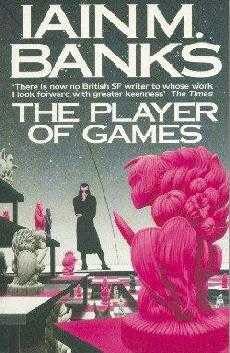
The Player of Games by Iain M. Banks


The Player of Games
Iain M. Banks
(Orbit, London: 1989)

A Culture Novel

READ: November-December 2007

I picked this up, mostly out of curiosity because Randal has been singing Iain M. Banks' praises for a while now. Though when he found out I was reading it, he said he would have recommended others of his books, rather than this one.

It was fine, but for someone who is only moderately familiar with the genre, Banks' particular mix of science fiction and fantasy, at least in this book, didn't really do it for me. The Player of Games tells the story of Gurgeh, a renowned game-player from the Culture, a super-advanced galactic civilization. He is sent, through a strange set of circumstances, to the Empire of Azad to participate in the Empire's ultimate tournament, a series of games which, for Azadians, determine job positions and social ranks.

While it was an interesting read, I found it a little long and ponderous at times. The story did have many parallels in today's world, especially in how its overall "point" (so to speak) was about racism and sexism, but I found it handled a little clumsily at times. Randal says I need to read more books in the genre to gain a better appreciation of what SF&F authors may be trying to do in similar cases, and he's probably right. That said, I'd be interested in reading more Banks because I can tell he has better things to offer.

Cryptonomicon by Neal Stephenson


Cryptonomicon
Neal Stephenson
(Avon Press, New York: 1999)

READ: July 2007

Well, the third time's a charm. I first started to try to read this a number of years ago, while still a grad student, and quickly put it aside. Too big, too much. Then I tried again this past Christmas, while on vacation in Bali, but having just finished Simon Winchester's lengthy, though fascinating, book on the 1906 San Francisco earthquake, it was again quickly put aside, again, too big, too much.

But as my time in Japan was winding down, I tried once more. And this time, I couldn't stop reading. In the classic "just one more chapter" routine, I stayed up quite late, night after night, reading on and on, wanting to know and see and hear and experience more and more.

In a nutshell, it's a fascinating (but GIANT) novel, covering over 50 years in cryptography (code-breaking, essentially), from WWII to modern-day. There are three major story lines, but once I got used to who was who (which took a few chapters), I never got lost again. It's an excellent, compelling, fascinating read, and I highly recommend it.

Mightier than the Sword: "My Hero" by Tom Holt


Mightier than the Sword: "My Hero"
Tom Holt
(Orbit, London: 2002)

Mightier than the Sword is Tom Holt's Omnibus 2 which consists of the novels "Who's Afraid of Beowulf?" and "My Hero". "My Hero" first published by Orbit in 1996.

READ: April 2007

I read the other half of Tom Holt's Omnibus 2, Mightier than the Sword, "Who's Afraid of Beowulf?", in March.

Of the three books by Tom Holt that I have now read (the third is Falling Sideways, which I read back in January 2006), I think this one is the weakest. It is funny and entertaining, but it suffered from the same thing Falling Sideways did to some degree: too many characters and too many parallel storylines. Figuring out who everyone is and what their purpose is in the story, is all a bit unnecessarily exhausting. Even when they all come together at the end, it isn't all clear. I think what made "Who's Afraid of Beowulf?" so successful, in my opinion at least, is that it avoided this almost entirely, by having just two sets of characters (Good v. Evil, essentially), rather than a bunch who come together at the climax only. That can be done well, but in this case, it was just a bit too scattered.

That being said, I did enjoy the book. It was an interesting premise: Jane is an author whose fictional characters start to need her help, and then when she tries to help them, it turns out she needs theirs. Fiction becomes reality, and vice-versa.

Mightier than the Sword: "Who's Afraid of Beowulf?" by Tom Holt


Mightier than the Sword: "Who's Afraid of Beowulf?"
Tom Holt
(Orbit, London: 2002)

Mightier than the Sword is Tom Holt's Omnibus 2 which consists of the novels "Who's Afraid of Beowulf?" and "My Hero". "Who's Afraid of Beowulf?" first published by McMillan (London) Limited in 1988.

READ: March 2007

Hildy Frederiksen is just your average archaeologist until the day she accidentally awakens King Hrolf Earthstar and his twelve companions from their centuries-old sleep. King Hrolf is determined to carry on, and finish once and for all, his war against the Sorceror King.

This is only the second book of Tom Holt's that I have read. I quite enjoy his style so far, and plan on reading more (including, of course, the second novel that is included in this book, "My Hero"). He's a bit of an oddball, an interesting mix of scifi-meets-fantasy-meets-humour. Anyway, this book was quite enjoyable; a quick, easy, entertaining read (just over 200 pages), and made me laugh out loud at a number of points.

Howl's Moving Castle by Diana Wynne Jones


Howl's Moving Castle
Diana Wynne Jones
(Harpertrophy, New York: 2001)

READ: February 2007

So, um, I first read this about two months ago, and after writing a review for it here in the stacks, I got a hankering to read it again. So I did. It's quite a compelling book, and I finished it in four hours flat.

I'm not reviewing it again - you can read the original review here.

Howl's Moving Castle by Diana Wynne Jones


Howl's Moving Castle
Diana Wynne Jones
(Harpertrophy, New York: 2001)

READ: December 2006

I think this was made into a Japanese anime movie not so long ago, by Miyazaki, if I'm not mistaken. Anyway, I'd heard good things about this book, so I figured it would make a good Christmas vacation read. And it did!

Sophie is an ordinary girl destined for ordinariness, when one day, through no error of her own, she runs afoul of the Witch of the Waste, who transforms her into an old woman. So Sophie sets out to seek her fortune, and ends up in the always-moving castle of Howl, a young and unlikeable wizard whose help Sophie has decided to seek. Things become, as they so often do when wizards are involved, most extraordinary.

The tale is quite enchanting, and while a little simple at times (again, targeted for readers much younger than me), I really enjoyed it. It was funny, the characters were decently-developed, and the story touching. A good read.

Things Not Seen by Andrew Clement


Things Not Seen
Andrew Clement
(Penguin Young Reader Group, New York: 2004)

READ: December 2006

This is not the usual kind of book I like to read. I was given the book in September by an American teacher who was at our school for a week as part of a student exchange. Nevertheless, it was good.

Bobby wakes up one morning to find he is invisible. He just isn't there anymore. This, understandably, freaks his parents out. He's a little freaked out, too. His parents don't want to get doctors involved as they fear Bobby will be taken away from them for research purposes, so they set out to do their own investigations. Social services gets involved after Bobby is absent from school for almost two weeks, and many other hijinks ensue. Bobby also makes friends with Alicia, a girl who suddenly went blind about a year earlier, and she also gets involved in trying to figure out how to make Bobby reappear. You can kind of figure out the plot from there.

While the plot is simple, I can see why it's a popular book with its pre-teen target audience (which a quick Internet search indicated). I haven't read enough in the genre to really assess it, but it's kind of entertaining, mildly compelling, and just quirky enough to keep you reading.

Twenty Thousand Leagues Under the Sea by Jules Verne


Twenty Thousand Leagues Under the Sea
Jules Verne
(Puffin Classics: 1995)

First published in French in 1870.

READ: September-November 2006

A 19th-century classic. Through a strange twist of fate, Professor Aronnax and two companions, his man-servant Conseil and a French Canadian (!) harpooner (whaler) called Ned Land, journey to the deepest, darkest depths of the sea with the elusive Captain Nemo on his fantastic submarine, Nautilus. It's a fantastic journey, but the reading is not for those who want their stories told quickly: the Professor is a noted marine biologist, and he wastes no opportunity to minutely detail every creature of the sea that he encounters.

However, the story itself is entertaining, and while I don't know Verne's background (nor have I read anything else by him - an oversight I should correct someday), I admire the level of work and research that must have gone into the writing of this tale. While submarines did exist when Verne wrote this, many of the features of Nautilus were not yet possible, and his imagination has to be admired. Finally, I found the political vision of Captain Nemo, a man who has turned his back on most of mankind, to be fairly un-Victorian, giving the book an interesting resonance for contemporary times (at least for me). Besides, if nothing else, this book was worth reading just to see how the 19th-century French viewed their provincial Canadian cousins.

Harry Potter and the Half-Blood Prince by J.K. Rowling


Harry Potter and the Half-Blood Prince
J.K. Rowling
(Bloomsbury, London: 2005)

READ: August 2006

Ah, the always irrepressible Harry Potter and his gang. Yes, I managed to wait many months before reading the latest instalment. In fact, it was one of the few English books at my school's library, so I felt compelled to borrow it.

I have kind of enjoyed the Harry Potter books thus far, and this one was the same. At times, I found it hard to put down, and at others, looked for a fast-forward button. Don't even get me started on the movie versions of these books, but J.K. Rowling, while a good, entertaining writer overall, could do with a bit more editing sometimes. Anyway, Harry and his friends get up to more hijinks - some of them are fun, some make you shake your head and roll your eyes. It was a good read, and I have to say I am anxious to read the next one to see how it will all end!

Watership Down by Richard Adams


Watership Down
Richard Adams
(Avon, New York: 1975)

READ: May-July 2006

This is one of those books that it felt like everyone else read in high school (or saw the movie of) except for me (that, and The Hobbit). I borrowed the book from Randal's endless bookshelf.

If you've only seen the movie and have not read the book, READ THE BOOK. It is wonderful. It is the story of Hazel and his brother Fiver and some other rabbits from his warren who strike off on their own into the unknown larger world after Fiver, who has a sense for these sorts of things, feels impending danger coming to the warren.

Definitely not a book just for children, Watership Down is a larger tale of environmental destruction and a study of societies. It's very, very good.

Small Gods by Terry Pratchett


Small Gods
Terry Pratchett
(HarperPrism, London: 1992)

READ: January 2006

So while I was going through my mini sci-fi/fantasy reading binge, I added this book to the list (yes, same bookshelf). The only other Terry Pratchett I have read is Good Omens, which he co-wrote with Neil Gaiman. And I am, oddly enough, constantly getting the two books confused. But Small Gods is a good book, though not laugh-out-loud funny like Good Omens. It takes place in a time when the various small gods have been largely forgotten in favour of a few large, very important gods. One of these, Om, unfortunately has somehow gotten trapped in the body of a very small tortoise, and he must convince his chosen disciple, Brutha, and the people of his land that he is in fact the god Om and must be obeyed. There are, of course, neighbouring lands with competing gods, and most worrying of all, the Quisition, a thinly-veiled version of the Spanish Inquisition. Hilarity ensues. Read it.

Dirk Gently's Holistic Detective Agency by Douglas Adams


Dirk Gently's Holistic Detective Agency
Douglas Adams
(Pan Books Ltd, London: 1988)

READ: January 2006

Another book sitting on Randal's shelf that he recommended I read. I was forewarned that it was not as good a book as the Hitchhikers Guide to the Galaxy series, but it's not bad. It had some loose bits that I didn't really follow, but on the whole, it was a good read. But, of course, if you ever had to choose one or the other, Hitchhikers Guide takes the prize all the way. And that's all I have to say about that!

Falling Sideways by Tom Holt


Falling Sideways
Tom Holt
(Orbit (Time Warner Books), London: 2002)

READ: January 2006

This is a funny, funny book. It had been sitting on Randal's bookshelf for a while and when I finally asked him about it, he said, "Yeah, it's good. Read it. You'll like it." And he was right.

Basically, if you have read Hitchhikers Guide to the Galaxy, you know the world is run by mice, right? Wrong! Frogs are actually in charge of the whole shebang. Or perhaps humans are actually frogs who think they are human. Or the frogs are human but think they are frogs. Anyway, something like that. There are also numerous clones involved in the various shenanigans, too, for good measure.

It gets bogged down at a few points, and once or twice I lost track of the storyline almost entirely (as you might have guessed from the previous paragraph), but it really is an entertaining read, and a short, breezy one at that.

Good Omens by Terry Pratchett and Neil Gaiman


Good Omens
Terry Pratchett and Neil Gaiman
(Ballantine Books, New York: 1991)

READ: November 2005

I have read this book twice now and both times it has proven laugh-out-loud FUNNY. It involves a demon and an angel who have gotten all too comfortable with their lives on Earth, a witch named Anathema, the coming Apocalypse, an 11-year-old boy who is supposed to be the Anti-Christ but turns out not to be, and another 11-year-old boy who turns out to be said Anti-Christ despite no one realizing he was (is). Confused? Read the book!

Alice in Wonderland and Through the Looking Glass by Lewis Carroll


Alice in Wonderland and Through the Looking Glass
Lewis Carroll
Ill. John Tenniel
(Wordsworth Editions Ltd., London: 1993)

READ: October 2005

N.B.: The Wordsworth cover is blue and shows Alice with the Cheshire Cat, but I couldn't find it online.


Oh, Alice! Always a lovely book to come back to. It's easy to forget the little fantastical things in both of these stories. And, of course, Through the Looking Glass is based (loosely) around a kitten - always a good inspiration. If you've never actually read either of these stories, well, it's never too late to do so. And John Tenniel's illustrations are definitely classic - these are the Alice-drawings that you think of when you think of Alice before Disney (and since, really - Disney Alice was never that clever).

The Lord of the Rings by J.R.R. Tolkien


The Lord of the Rings
J.R.R. Tolkien
Illustrated by Alan Lee
(Houghton Mifflin, Boston: 1991)

First published in 1954 (Fellowship of the Ring).

READ: June-October 2005

I don't actually need to review this one, do I? You all know the story. If you don't - or if you've only ever seen the recent movie version - go read it. God forbid you've only seen the version by Ralph Bakshi, which I for one am trying to purge from memory (not easy to do when I see the DVD of it that I own every day). The BBC's audio dramatization, on the other hand, is good. But I don't think the musical counts.

Not for the faint-hearted, of course - my copy of the illustrated version weighs in at over 1,000 pages, plus another 200 or so pages of appendices (all necessary reading, of course). But if you've got the patience, it's a wonderful tale. And imagine the hours you can then while away debating movie-vs-book! You will wonder why Tom Bombadil was left out, and debate whether it was necessary that Glorfindel's role in the Flight to the Ford be melded into Arwen. Was Boromir as bad an anti-king, pro-ring guy as the movie tried to make him out to be, and what was the exact nature of the prophetic dream that caused him to seek Elrond"'s counsel?

Or, um, maybe that's just the kind of things I would enjoy ...