2012 booklist

  1. A Clash of Kings by Orson Scott Card
  2. Ender's Game by Orson Scott Card
  3. The Sisters Brothers by Patrick deWitt

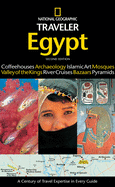
National Geographic Traveller: Egypt


National Geographic Traveller: Egypt
2nd edition
(National Geographic: 2007)

READ: December 2010 - January 2011

I actually never read through the entire book, but dipped in and out, here and there, as one is wont to do with a travel guide. Lonely Planet's forte is getting you out and about, explaining the how and why to go places. I like them a lot. We didn't feel a need to purchase a Lonely Planet guide to Egypt, however, prior to our travels there this winter, as most of our trip was going to be spent with a tour group, and we had a fairly clear idea of what we were going to do while we were not on tour. We bought the National Geographic guide because it was so beautiful, and had such extensive entries on the various sites, both from an archaeological and a cultural viewpoint. It was absolutely fantastic for this purpose, and served us well on a number of occasions where we had to decide between visiting Optional Location A and Optional Location B. (The option to visit neither never even occurred to us; this is how we travel.) The guide was well-written, with a lot of detail but never too much, and, quite importantly, beautiful photos accompanying the text to illustrate exactly what was being discussed (some other guides do not have enough photos). My only regret was that I did not have time to read through the entire long section on visiting the Cairo Museum before we actually went there.

2011 Booklist

  1. National Geographic Traveller: Egypt
  2. This Is Your Country On Drugs: The Secret History of Getting High in America by Ryan Grim
  3. Norwegian Wood by Haruki Murakami
  4. From "Radical Extremism" to "Balanced Copyright": Canadian Copyright and the Digital Agenda edited by Michael Geist (currently reading)
  5. Going Beyond Google: The Invisible Web in Learning and Teaching by Jane Devine and Francine Egger-Sider (currently reading)
  6. The Big Oyster: History on the Half Shell (audio book) by Mark Kurlansky (currently listening)
  7. The President's Choice Garden Guide Series: Containers
  8. Pocket Gardening: A Guide to Gardening in Impossible Places by Marjorie Harris (currently reading)
  9. Dune by Frank Herbert (currently reading)

The Road by Cormac McCarthy


The Road
Cormac McCarthy
(Movie Tie-In Edition)
(Knopf Doubleday Publishing Group: 2009)

READ: January - February 2009

My first mistake was trying to read this whilst on vacation in Mexico. While it worked well as a book to read on the flight down (indeed, I picked it up in a bookstore only a day or two prior to our departure), the post-apocalyptic desolation of the book did not ring true while on a lush, sunny beach. However, post-vacation, I was able to return to this book.

I had a few friends who had read it and sung its praises, one of the reasons I picked it up. They talked about the nightmarish quality of the book and of the engrossing nature of its writing. I thought the book was good and well-written; however, I wasn't sure why it was so lauded. One of the book's qualities, I think, was in how it keeps feeling like something is about to happen, yet nothing (almost ever) does. The post-apocalyptic world isn't full of monsters and excitement; it is full of day after day spent on the move, trying to find somewhere with enough food to sustain yourself. That was well-done by McCarthy. Maybe it is because I have watched Randal play Fallout 3 too much; maybe I have just spent too much time thinking, reading, or watching things about the apocalypse, but I didn't find McCarthy's vision of the post-apocalyptic world particularly frightening. Yeah, it's quiet, and scary, and hard to find food, and not everyone is out there to help you. It's the post-apocalypse.

2010 Booklist

  1. The Road by Cormac McCarthy
  2. Cheap: The High Cost of Discount Culture by Ellen Ruppel Shell
  3. The Meaning of Everything by Simon Winchester
  4. World History for Dummies by Peter Haugen (unfinished)
  5. Martha Stewart's Encyclopedia Of Crafts
  6. Kneadlessly Simple: Fabulous, Fuss-Free, No-Knead Breads by Nancy Baggett
  7. Knitting for Babies: Blankets, Booties, Bibs & More
  8. The Housekeeper and The Professor by Yoko Ogawa
  9. The Theory and Practice of Online Learning, 2nd ed., edited by Terry Anderson (unfinished)
  10. Complete Contemporary Craft: Textiles
  11. The Rapture by Liz Jensen
  12. The Music Room by William Fiennes
  13. Martha Stewart's Encyclopedia Of Sewing And Fabric Crafts
  14. Law School 2.0: Legal Education for a Digital Age by David I.C. Thomson
  15. Life Inc.: How The World Became A Corporation And How To Take It Back by Douglas Rushkoff
  16. The Zombie Survival Guide: Complete Protection from the Living Dead by Max Brooks
  17. Bloodcurdling Tales of Horror and the Macabre by H.P. Lovecraft
  18. Life Ascending: The Ten Great Inventions of Evolution by Nick Lane (unfinished)
  19. In Defence of Food: An Eater's Manifesto by Michael Pollan
  20. Salt: A World History by Mark Kurlansky
  21. The Life and Times of the Thunderbolt Kid by Bill Bryson
  22. Ringworld by Larry Niven
  23. The Secret Life of War: Journeys Through Modern Conflict by Peter Beaumont
  24. One-Skein Wonders: 101 Yarn-shop Favorites From Coast To Coast by Judith Durant
  25. Stitch & Bitch Nation by Debbie Stoller
  26. The Golden Compass (audiobook) by Philip Pullman
  27. I.O.U.: Why Everyone Owes Everyone and No One Can Pay by John Lanchester
  28. Parisians: An Adventure History of Paris by Graham Robb (unfinished)
  29. Bags In Bloom by Susan Cariello
  30. A Reading Diary: A Passionate Reader's Reflections On A Year Of Books by Alberto Manguel
  31. Cairo: The City Victorious by Max Rodenbeck
  32. A Short Course in Digital Photography by Barbara London (unfinished)
  33. Under the Skin by Michael Faber
  34. Four Fish: The Future of the Last Wild Food by Paul Greenberg (unfinished)
  35. Killing the Shamen by Thomas Fiddler (unfinished)
  36. The Passage by Justin Cronin

In Europe: Travels Through the Twentieth Century by Geert Mak


In Europe: Travels Through the Twentieth Century
Geert Mak
Translated by Sam Garrett
(Pantheon Books, New York City: 2007)

First published in the Netherlands as In Europa by Uitgeverij Atlas, Amsterdam, c. 2004 Geert Mak.

READ: April 2009

Heather Mallick, one of my favourite Viewpoint & Analysis columnists on the CBC website, reviewed this book about 6 months ago, and I was immediately intrigued. The book instantly went on my must-read list, though in the form of a request on a long hold list at the public library.

Well, Christmas - as I like to call it when I get an email about a long-forgotten book now being held for me at the library - arrived at the beginning of April. I sunk into this book with very little hesitation, and found it quite hard to get out.

Geert Mak, a journalist for a Dutch newspaper and an acclaimed Dutch author, spent the year 1999 travelling all across Europe in search of eyewitnesses and contemporary accounts of historical events from the past century. He takes us to so many places and introduces us to so many people. The 20th century was anything but dull for Europeans. But Mak's book is not a mere recitation of facts, dates, and events. He assumes his reader already knows the basic outlines of modern history, and so, while he does spend some time giving historical and political background, he mostly explores events through the people who experienced them.

20th century Europe was not always a happy place to be, depending on where you ended up. There was so much bloodshed, so much violence, so much turmoil. Mak does a very good job at putting a human face on much of this. On the one hand, that makes things like the rise of Nazism and Hitler in 1930s socialist Germany easier to understand; on the other, it also makes things like "the Troubles" in Ireland that much more horrifying, gut-wrenching, and disturbing. Mak makes recent European history personal.

Weighing in at just over 800 pages, this is a huge book! I had to read it far too quickly, and had to absorb a lot of information, drama, and emotion in each sitting. Sometimes it overwhelmed me for that reason. But mostly it just compelled me to keep reading (even if that compulsion was occasionally caused by a feeling of "if you keep reading, things must get better"). Mak's writing is lucid and clear, his eye for detail is keen, and he knows how to tell a story in such a way that the events become very personal.

Happiness(TM) by Will Ferguson


Happiness
Will Ferguson
(Penguin Group Canada, Toronto: 2002)

READ: April 2009

One of my all-time favourite books. I have read it at least three times since first picking it up in 2004 (because I found the giant daisy on the cover was, ironically, pleasing). I hadn't heard of Will Ferguson before, though he has since become one of my favourite authors. I have since bought the book again at least three times, since I kept giving away my own copy to others.

It is a story about self-help books. One day, junior editor Edwin, desperate to show the boss that he is working on something, pulls - not out of his slush pile but literally out of the garbage - a giant, rambling manuscript someone had sent in, claiming it to be The Only Self-Help Book You'll Ever Need. The book and its claims are clearly ludicrous, but the boss gets Edwin to push through and get it published. The book is an instant success...except instead of reading it and moving along to the next trendy thing, people start taking its advice to heart. They quit their jobs, move to communes, start farming sustainably. They quit smoking and drinking, too. But even worse, they stop buying self-help books. Soon, the world's biggest problem is that everyone, everyone is just too darn happy. Except for Edwin.

The first time I read this book, I remember many laugh-out-loud moments. There were a number of chuckles this time around, too. Ferguson is witty and concise, his characters are likeable, and his insight into the human psyche is spot-on as well as amusing.

The Hike It, Bike It, Walk It, Drive It Guide to Ottawa, the Gatineau, Kingston and Beyond by Ann Campbell


The Hike It, Bike It, Walk It, Drive It Guide to Ottawa, the Gatineau, Kingston and Beyond
Ann Campbell
(Boston Mills Press, Erin (Ont.): 2001)

READ: intermittent to March 2009

A good book to help me discover some of these places literally next door. I have yet to undertake an entire one of Campbell's suggested excursions, but I have done some in part; for example, hiking up to the Mackenzie King estate in Gatineau Park. I keep this one nearby and often consult it when starting to wonder what to do on an upcoming Saturday. My one complaint: each described excursion would be well-served by an accompanying map. There isn't a single map in the whole book.

Watchmen by Alan Moore and Dave Gibbons


Watchmen
Alan Moore and Dave Gibbons
(DC Comics, New York: 2008)

Originally published in serialized form, 1986-87.

READ: March 2009

Read the graphic novel in anticipation of going to see the movie, and I was so glad I did. Seemingly the story of how a number of retired superhero crime-fighters are now, apparently, being slowly targeted and eliminated, it is also, and much more importantly, a larger story of the fight for world domination and the end of the world. I thought the movie did a decent job of conveying the story onto the screen. The action and movement that is packed into the novel, however, is amazing. I may have to read some more graphic novels, if anyone has any suggestions.

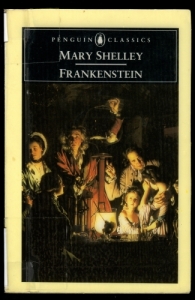
Frankenstein by Mary Shelley


Frankenstein
Mary Shelley
Wordsworth Classics edition
(Dover Publications, New York: 1994)

First published in 1816.

READ: February-March 2009

I've had this book for many years now, and had tried once or twice to read it with no success. This time, I did! You really have to be in the mood for some Victorian literature - it's wordy, with lots of big words. (Hey, I have 2 graduate degrees - I know a big word when I see one.) Plus, it's written in the "confessional" style, which is probably my least favourite writing style. And not only is it confessional in tone, it's purportedly written by Dr. Frankenstein, who hears all this from the monster himself. The monster had initially fled after Dr. Frankenstein expressed horror at the being he had just created. Over the course of many, many years, he apparently taught himself English by living in the shed of an unsuspecting family in Switzerland, listening to their conversations and watching their interactions, night after night. His English is impeccable! And very Victorian. Then there is a whole string of misunderstood events that lead to a fairly high body count, and a multi-country pursuit.

However, once I was able to suspend my disbelief and get past the fact that the monster spoke as if he'd fallen out of a novel, it was, in fact, a fairly enjoyable story. It is not a very long book, and the story has a good pace. By the end, you really do feel sorry for the monster.

20,000 lieues sous les mers by Jules Verne


20,000 lieues sous les mers
Jules Verne
Édition jeunesse
(Hachette Jeunesse: 2009)

Publié pour la première fois dans sa version intégrale en 1870.

READ: November 2008 - March 2009

J'ai lu ce livre en anglais pour la première fois il y a quelques années à peine. Cette version fut la version jeunesse. C'est une histoire très intéressante (comme la première fois!), et je le recommande fortement, mais le français était d'un niveau assez compliqué... Voir le recensement en anglais pour plus d'information.

The Academic Library and the Net Gen Student : Making the Connections by Susan Gibbons


The Academic Library and the Net Gen Student : Making the Connections
Susan Gibbons
(American Library Association, Chicago: 2007)

READ: February 2009

Libraries like to think that they are at the cutting edge of technology, but more often than not, they really aren't. Many in librarianship (the younger ones, anyway) likely played with various technologies while in library school[1], but once out in a real library, you are suddenly faced with layer upon layer of bureaucracy anytime you want to try another or get anything done.[2]

In this book, Susan Gibbons, the director of digital initiatives for the libraries at the University of Rochester, surveys the main Web 2.0 technologies being used by students today, and suggests ways in which libraries could use these in order to better meet the needs of students. The technologies she discusses include: social networking sites like MySpace and Facebook, RSS feeds, online gaming and MMORPGs like Second Life, wikis, blogs, collaborative sites like LibraryThing, social bookmarking sites like del.icio.us, and, of course, instant messaging.[3] She also stresses the importance of reaching students by making library services and websites available for cellphones and other mobile devices.

Some of these ideas work better than others. I see, for example, no need for my library to have a presence in something like Second Life (but maybe that's just because I don't really understand its purpose). I question the value of a Facebook page (though the idea of having "fans" is kinda neat). I've started playing around with RSS feeds (though I note the law library does not have one), though the jury is still out on whether it's saving me time or whether it's causing me to read more things than before (I lean slightly toward the latter; however, I am becoming more well-informed, at least where travel, book reviews, and alien abduction stories[4] are concerned). Library sites do need to become more accessible via cellphones, etc., and I certainly see applications like IM helping libraries gain more ground.

The book was written in 2006, so it's not (yet) too hopelessly out-of-date. While I didn't find it too helpful in terms of suggesting suggestions of things we could actually do here at my library (though that might be at least partly due to bureaucracy that stands between my ideas and actual change), it was good for giving an overview of what is out there and what some other libraries are doing with some of these tools.

[1] I know I personally loved my classes in multimedia (for which I made an electronic version of the Tolkien bestiary), electronic text design (wrote an e-paper on the (alleged) death of the book), and yes, even the dreaded systems analysis and design (my partner and I designed a database system for the law library - alas, never implemented - in which reference questions could be tracked and indexed for easy retrieval in the future).

[2] Statement not meant to imply anything about reviewer's current workplace. If anything, I have recently started finding some loopholes to work around the bureaucracy, and implement ideas that don't affect the bureaucracy. The real problem really has become finding the time to do so.

[3] I believe the book was written pre-Twitter, but that certainly has a role to play as well.

[4] That last one is (mostly) a joke.

The Next Gen Librarian's Survival Guide by Rachel Singer Gordon


The Next Gen Librarian's Survival Guide
Rachel Singer Gordon
(Information Today, Medford (NJ): 2006)

READ: January-February 2009

I believe I stumbled across this book when getting some other books on librarianship that I had recently read reviews for. The author, Rachel Singer Gordon, is a name I already knew - she is the editor of the Info Career Trends Newsletter to which I subscribe, amonst other things. She is one of those people who, in the world of librarianship at least, always seems to have something interesting to say. Plus I figured I am a NextGen librarian (I guess?) and so might learn something useful or two.

I probably had a larger need for this book a few years ago, but I still found it useful. Gordon provides advice and tips on many different issues in librarianship, from surviving library school*, to finding a first job, to perceptions of librarianship, to working with older colleagues who might perhaps be a bit more - ahem - traditional.

Another important aspect to note is that Gordon is focusing on the American library job market, which, from what I know, is significantly different from the Canadian one. It is really hard for many graduates of American library schools to snag that first job. Canadian library school graduates - and my evidence is largely anecdotal on this account, I admit - have a much easier time. Gordon gives some good general advice on job-hunting; for example, no matter how broke you might feel upon graduation, don't necessarily just snap up the first job that comes your way.

What I really found useful in this book is that Gordon also sent out surveys to both NextGen (under-40) and older librarians (over-40), in order to solicit feedback on the issues covered in her book. Some of the responses to these are very telling. Others are quick to point out that the under-40, over-40 divide is a bit of a false dichotomy, which Gordon (to her credit) acknowledges whenever possible. (You have to draw a line in the sand somewhere, right?)

The final chapter in the book tackles the subject from a completely different angle. It is written for current administrators and managers, rather than the NextGen librarians working for those administrators and managers. This gives an interesting perspective from "the other side of the fence", so to speak.

Well-written, and a quick, easy read, I would recommend this to people still in library school, or those recently graduated (within the last few years). Beyond that, you've probably figured out most of what's in the book - maybe the hard way! I would also recommend it to older librarians, administrators and managers, who might be having a hard time relating to or understanding their younger colleagues.

* Those of you who are not librarians will not necessarily know that while most librarians are very content and happy in their day-to-day jobs, library school itself is almost universally disliked.
2009 Booklist


  1. Silent Spring by Rachel Carson

  2. The Map that Changed the World by Simon Winchester

  3. Payback by Margaret Atwood

  4. The Next Gen Librarian's Survival Guide by Rachel Singer Gordon

  5. The Academic Library and the Net Gen Student : Making the Connections by Susan Gibbons

  6. 20,000 lieues sous la mer by Jules Verne

  7. Frankenstein by Mary Shelley

  8. Watchmen by Alan Moore and Dave Gibbons

  9. Chartrand des Écorres by Cosette Marcoux-Boivin (incomplete)

  10. Beijing Confidential: Tales of Comrades Lost and Found by Jan Wong

  11. Happiness (TM) by Will Ferguson

  12. The Hike It, Bike It, Walk It, Drive It Guide to Ottawa, the Gatineau, Kingston and Beyond by Ann Campbell

  13. In Europe: Travels Through the Twentieth Century by Geert Mak

  14. The Rough Guide to Paris

  15. The Story of French by Jean-Benoît Nadeau and Julie Barlow

  16. The Uses and Abuses of History by Margaret McMillan

  17. The Inheritance: The World Obama Confronts And The Challenges To American Power by David E. Sanger

  18. Neither Here Nor There: Travels Through Europe by Bill Bryson

  19. Canadian Courts: Law, Politics, and Process by Lori Hausegger, Matthew Hennigar & Troy Riddell

  20. The Jade Peony by Wayson Choi

  21. Chaos: Making a New Science by James Gleick (incomplete)

  22. The End of Lawyers? Rethinking the Nature of Legal Services by Richard Susskind (incomplete)

  23. Nova Scotia Book of Everything by John MacIntyre & Martha Walls

  24. The Nature of Economies by Jane Jacobs (incomplete)

  25. The English Legal System: 2009-2010 by Gary Slapper & David Kelly

  26. Wilderness Pleasures: A Practical Guide to Camping Bliss by Kevin Callan

  27. The Hobbit by J.R.R. Tolkien

  28. The Fellowship of the Ring by J.R.R. Tolkien

  29. The Two Towers by J.R.R. Tolkien

  30. A Paddler's Guide to Weekend Wilderness Adventures in Southern Ontario by Kevin Callan

  31. The Return of the King by J.R.R. Tolkien

  32. Bachelor Brothers' Bed & Breakfast by Bill Richardson

  33. The Human, The Orchid and The Octopus: Exploring and Conserving Our Natural World by Jacques Cousteau and Susan Schiefelbein

Guide: Van Gogh Museum from the Van Gogh Museum in Amsterdam

image not available

Guide : Van Gogh Museum
from the Van Gogh Museum in Amsterdam

READ: November 2008

Bought this when we went to the Museum in 2005. It's actually in French (they were out of English copies). "The Sower", the painting I was writing a paper on for my art history course is actually on display at the van Gogh Museum, so there was some good information specifically on that particular painting. I really like museum guides generally - they are a good reminder of what I saw at the museum - and this is certainly one of the better ones.

Van Gogh by Keith Wheldon


Van Gogh
Keith Wheldon
(Smithmark Publishers, New York: 1995)

READ: October-November 2008

Again, I read this for my art history course paper. This is a giant coffee table book that a friend gave to me many years ago before moving overseas. Finally I had a reason to use it, rather than moving it from bookshelf to bookshelf in one apartment after another (bookshelves it never fit on, I might add). Wheldon looks at van Gogh's work in the larger context of contemporary art movements, and many of the works have a few pages dedicated just to critiquing (detailing) the techniques used in each one.

Discoveries: Van Gogh: The Passionate Eye by Pascal Bonafoux


Discoveries: Van Gogh: The Passionate Eye
Pascal Bonafoux
(Harry N. Abrams, New York: 1992)

READ: October-November 2008

I was writing an essay on van Gogh and, in particular, his painting "The Sower" for my art history course. I have had this book on my shelf forever. It is a detailed look at van Gogh's art and his life, including extracts from his numerous, lengthy letters to his brother, Theo, and others. While more factual than scholarly, it is a good examination of van Gogh and his particular style of Impressionism (expressionism?).

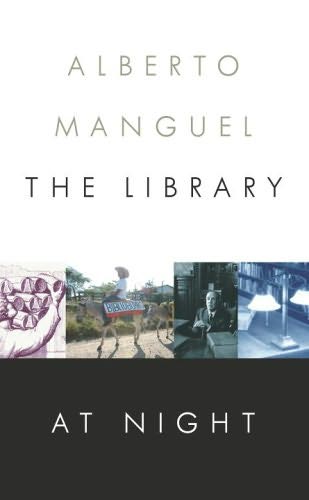
The Library at Night by Alberto Manguel


The Library at Night
Alberto Manguel
(Alfred A. Knopf Canada, Toronto: 2006)

READ: June - July 2008

This is a delightful book and I was sad to finish it (though largely unable to stop from compulsively reading it) and sadder still to send it back to the library from whence it came.*

Alberto Manguel is not a librarian, though he would make a marvelous one. He is a bibliophile, and knows his way around books and the written word so incredibly deeply and thoroughly. I can only hope to ever have a tiny fraction of the bookish worlds in his head. This book should be required reading for every first-year library school student. It is a wonderful tour of library history with stops at many interesting, quirky places along the way.

Some slices of my favourite parts:

  • Talking about how early Arab libraries often divided books by subject rather than alphabetically (as most early Western libraries tended to do), Manguel tells us about the doctor Abou Ali El-Hossein Ibn Sina ("Avicenna") who discovered a library at the home of one of his patients in what is today's Uzbekistan. While the doctor's account deals mostly with the expert classification of the books, I was struck in particular by the doctor's description of the resident librarian as "keeper of the live memory of the books". How apt.


  • His discussion of how the digitization of materials may, in fact, not be the saviour of our times is an interesting look at the other side of the coin. While slanted a little heavily toward the printed word - "As any reader knows, a printed page creates its own reading space, its own physical landscape in which the texture of the paper, the colour of the ink, the view of the whole ensemble acquire in the reader's hands specific meanings that lend tone and context to the words" - it is certainly enlightening in terms of helping us to question the attitude of complete and total reliance that we have taken toward electronic materials. As one good example, in 1986, the BBC undertook a massive project to digitize the Domesday Book, a census of England from the 11th century. As of March 2002, the digital copies could no longer be accessed on a computer (even on the original computers for which the discs had been made). The original paper copy, however, is still available and perfectly useable (though, granted, you have to go to Kew in Britain to see it). At the very least, these sorts of examples could be used to good effect in a library school debate on the subject.


  • Manguel's admittance that his library is larger than what he will perhaps be able to read in his lifetime made me laugh, for my library, while undoubtedly infinitely smaller and not as broad-based, is fast taking on the same unmanageable nature. "I know that my books have unlimited patience," he writes. "They will wait for me till the end of my days." I love that. In a similar vein, he then goes on to discuss the decidedly odd Samuel Johnson, the 18th-century compiler of the infamous Dictionary of the English Language, who "thought it 'strange advice' to urge someone to finish a book once started. 'You may as well resolve that whatever men you happen to get acquainted with, you are to keep to them for life.'" While I try in most cases to finish the books I have started, I am not as wedded to that ideal as I once was. With so many good books out there, why waste time reading something you don't enjoy? There are always other books waiting.


But don't get me wrong: You don't need to be a librarian to enjoy this book (though it will certainly help!). You do, however, need to love books. I for one will be keeping my eyes open and will pick up a copy of this as soon as I can find it at one of my favourite second-hand bookshops. Because, like a good friend, it would be nice to have around.

* Having written this review a few months ago and then having forgotten to upload it to this site, I am happy to add that I have since bought my own copy.

The Dog Who Wouldn't Be by Farley Mowat


The Dog Who Wouldn't Be
Farley Mowat
ill. Paul Galdone
(Bantam Books, New York: 1984)

First published by Little, Brown in 1957. Two pieces in this book first appeared in magazines - one in the Atlantic Monthly, one in the Saturday Evening Post.

READ: June - July 2008

Who doesn't know and love this book? I read it as a kid, of course, but recently re-read it during my daily commute (as are, indeed, the majority of my books consumed these days). Mowat has a very familiar, conversational, and almost intimate tone in this book, which made me, the reader, feel like he was telling me these stories directly, and I felt so pleased that he was sharing them with me. However, I find it an oddly suspicious coincidence that no sooner had I finished reading this book than Rion had his own skunk encounter. My telling of Rion's misadventure is neither as eloquent nor as entertaining as Mowat's rendition of Mutt and his numerous escapades (and, for that matter, numerous trysts with skunks). Perhaps I am biased toward dogs, but all in all, an enjoyable read.

Les Enquêtes de Vipérine Maltais : Mortels Noëls by Sylvie Brien


Les Enquêtes de Vipérine Maltais : Mortels Noëls
Sylvie Brien
(Gallimard Jeunesse, Paris: 2004)

READ: June 2008

Un livre d'enfant, évidemment. En 1920, à Montréal, Vipérine Maltais, jeune pensionnaire, est chargée de déterminer s'il fut vraiment un fantôme qui a fait peur la nuit à une des soeurs. Concept simple, mais toute une histoire se développe. Très intéressant, facile à lire, puis une bonne manière de pratiquer mon français (j'ai appris toutes sortes de nouveaux mots).


A children's book, obviously. In 1920, in Montreal, Vipérine Matais, a young girl who lives in the convent, has been assigned the task of determining whether it really was a ghost that scared one of the nuns one night. A simple premise, but a whole story develops out of this. Very interesting, easy to read, and a good way to practice my French (I learned a bunch of new words).